Extreme Weather Durability
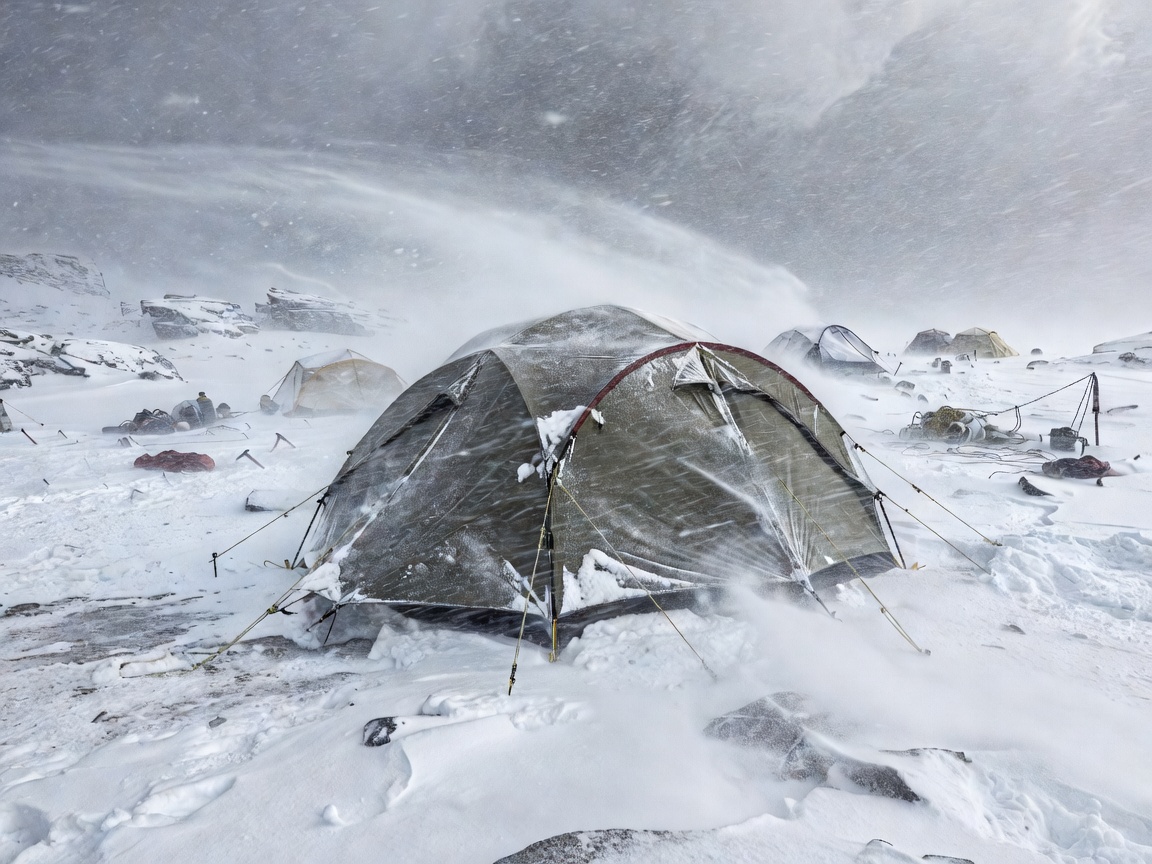
The term "4-season" is slightly misleading. These tents are not designed to be comfortable in the heat of summer; they are specialized tools built strictly for winter and high-altitude extreme weather. When temperatures plummet and the wind howls, a 4-season tent is your survival capsule.
Architecture of a Fortress
Most extreme weather tents utilize a geodesic dome design. Multiple poles cross each other numerous times, creating rigid triangles of tension. This prevents the roof from collapsing under heavy snow loads and stops the walls from bowing in violently during gale-force winds.
Materials & Ventilation
Unlike 3-season tents which feature copious amounts of mesh for airflow, 4-season inner tents are made of solid nylon or polyester canopy material. This traps body heat and prevents wind-blown snow (spindrift) from entering the sleeping area.
Because they are sealed up tight, managing condensation becomes a massive challenge. Look for models with rigid roof vents that can be propped open even during a storm to allow moisture from your breath to escape, preventing a frost shower in the morning.
Single-Wall vs. Double-Wall
Mountaineers often debate this. Double-wall tents (inner tent plus rainfly) handle condensation much better and provide a dry vestibule, but they are heavier. Single-wall tents use waterproof/breathable fabrics (like Gore-Tex or similar laminates). They are lighter and have a smaller footprint for chopping into a narrow snow ledge, but can suffer from internal ice build-up in specific conditions.